
Kalinchowk Bhagwati is one of the most famous Hindu temples in Nepal, lying among the beautiful hills of the Dolakha District. Lying at 3,842 meters or about 12,605 feet above sea level, this temple is visited annually by thousands of pilgrims and tourists from different parts of the world because of its spiritual significance, natural beauty, and panoramic Himalayan views. This in-depth study explores the historical significance, religious importance, architectural features, and aspects of tourism in the Kalinchowk Bhagwati Temple in detail.
Location and Importance
It is located in Kalinchowk Rural Municipality of the Dolakha District, Province 3, eastern Nepal. It is a place noted for mountain scenery, especially Langtang Himal and Gauri Shankar, and Ganesh Himal-together with several other peaks in the Himalayas. Geographically, it lies within the Gaurishankar Conservation Area, which explains the environmental significance of this site, where rivers like the Sun Koshi and Tamakoshi originate.
Traditionally, Kalinchowk has been considered a place of pilgrimage by Hindus, as well as by followers of the goddess Bhagwati, who is revered as the fierce and powerful form of Durga or Kali. This notion of religious relevance and significance in this regard is essentially based upon certain ancient traditions and beliefs related to the goddess Kali, being one of the goddesses of power, destruction, and protection.
The Mythological and Historical Background
Kalinchowk Bhagwati derives its history from mythological tales and local legends. It is said that the Goddess Kali meditated at Sumeru Parvat, the highest hilltop of Kalinchowk. During meditation, some evil powers tried to overpower her, which resulted in a fierce battle. The intervention of Lord Shiva, with his divine Trishul and sacred water, empowered Kali to reign over the evil forces. Her right arm is believed to have fallen here, and this holy tale adds much to spiritual ambience in this temple.
This temple, built in the 19th century, has long been the focal point of worship and religious ceremonies. This is deeply rooted in beliefs that Goddess Kali will grant the prayer and wishes of her devotees, hence making it an essential site of pilgrimage for those seeking power, protection, and blessings.
Architectural and Cultural Features
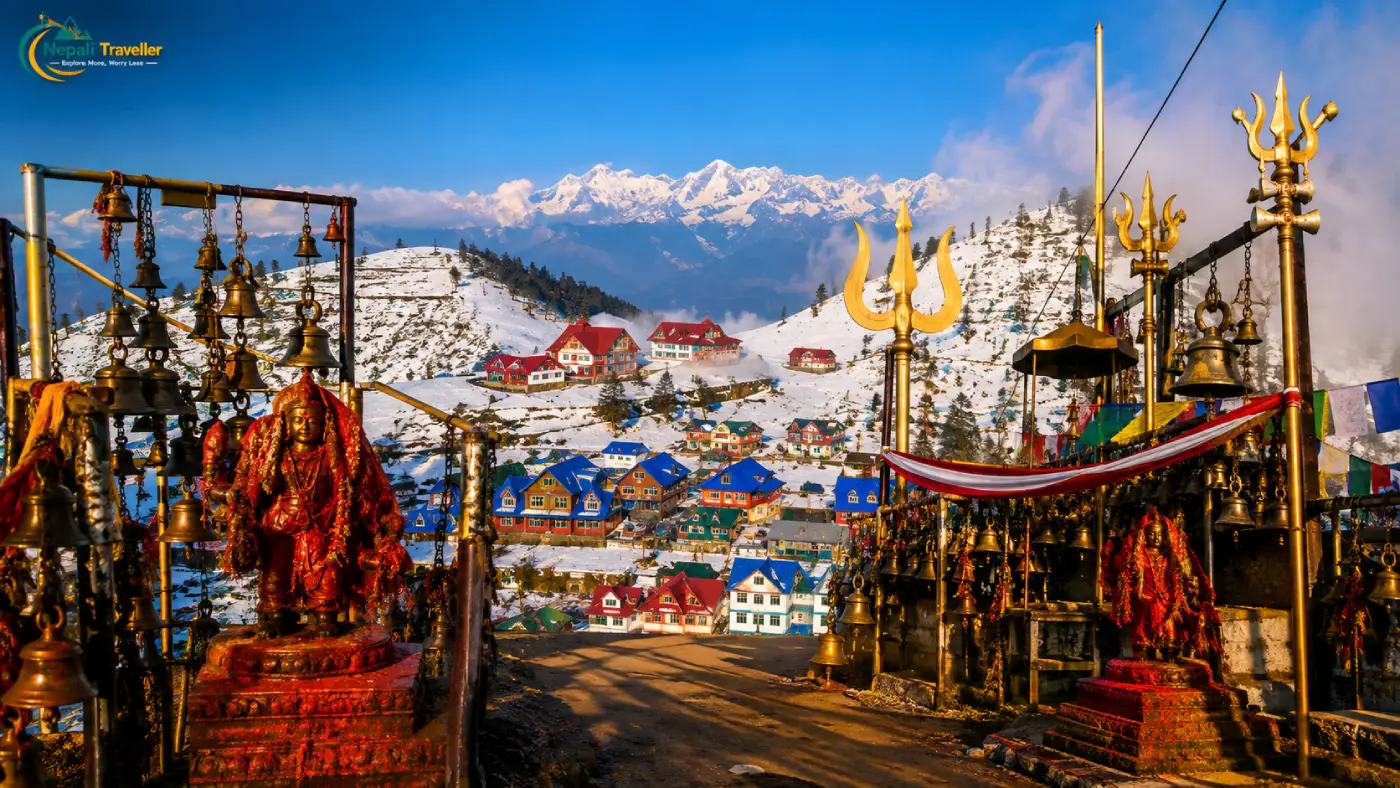
The temple complex is simple and spiritually deep. It has traditional Nepali-style wood architecture, with intricate carvings. The idol of goddess Bhagwati rests in the main sanctuary; flowers, bells, and scarves adorn it, while items offered to her include bells, trishuls, and other ceremonial objects.
Especially on the occasion of festivals and other special days, including Dashain and Tihar, Kalinchowk Temple is very vibrant, with thousands of devotees coming to it to worship and participate in special rituals. Animal sacrifices are performed near the temple, corresponding to the local customs and religious practices devoted to Kali.
It is regarded as sacred, and holy water there is assumed to have divine blessings. Quite often, pilgrims take water from the pond, which is believed to confer spiritual and worldly benefits. It houses statues of Shiva, Saraswati, and Ganesha, symbolizing syncretism in Hindu beliefs.
Tourism and Accessibility
Not only a site of pilgrimage, Kalinchowk is also one of the popular trekking destinations in Nepal, combining spiritual journey with natural adventure. Normally, the trek starts from Charikot, the headquarters of the Dolakha district, from where travelers reach Kuri Village, situated at the base of the temple.
From Kuri, the temple is accessible via a moderately steep hike for 45 minutes to an hour. In 2018, a cable car service began operation in order to make access easier and more convenient than it would otherwise have been in cold and snowy winter conditions. Visitors still walk 10-15 minutes from the drop-off station to the shrine even when using the cable car. The hike affords spectacular views of surrounding mountains, rhododendron forests, and traditional mountain villages.
In winter, snowfall makes Kalinchowk one of the hotspots for skiing and a core attraction for tourists who like winter sports amidst beautiful white landscapes. Being a trek route that offers immersive experiences into nature, culture, and spirituality, it stands as an all-season destination.
Best Time to Visit
The best time to visit Kalinchowk Bhagwati is during the spring and autumn seasons-from March through June and from September through November-when the weather is good and the skies are clear for optimal mountain views. These make spring very special with its rhododendron blooms, while in autumn, there is crisp air with stable weather; hence, it’s appropriate for trekking and sightseeing.
It is snowy between December and February, with accessibility compromised at times due to road conditions. During the time of the monsoon, which starts in June and lasts until August, trekking is avoided because of the risk of landslides and heavy rain that make travel not safe.
Practical Information and Visitor Tips
- How to get there: Kalinchowk is 133km from Kathmandu – a road trip to Charikot, followed by a vehicle ride to Kuri Village.It is possible to reach the temple from Kuri through a hike or via a cable car.
- Altitude Considerations: Visitors may feel slight changes associated with altitude at 3,842 meters; therefore, acclimatization is recommended with proper hydration.
- Accommodations: There are numerous local lodges and guesthouses that provide service during the night in Kuri Village.
- Things to bring: warm clothing, sturdy hiking boots, and necessary items like snack food and water.
- Respect for culture: Respect the various rituals, follow the rules of the temple, and never go inside when it is a festival.
Religious Festivals and Rituals
Significant festivals (Dashain, etc.) cause Kalinchowk Bhagwati to become very active, with thousands of worshipers in the temple to receive blessings of strength, prosperity, and protection from the goddess. The temple performs elaborate rituals, offerings, and may sacrifice animals, especially during festival times. Pilgrims perform their own act of worship by offering bells, flowers, incense, and ghee as offerings. Special prayers and chants also invoke Goddess Kali to intercede in their behalf related to family personal and problems in life.
Cultural Significance
The mythology of Kalinchowk is centered on power and protection and divine strength. The fight of Kali with evil forces symbolizes the victory of good over evil which is considered the most important belief in Hinduism. It is seen as not only a religious site, but also a site of endurance and spiritual power for citizens.
The combination of natural beauty and centuries-old tradition of worship has made Kalinchowk a place for a meeting of faith and nature.
Conclusion
Kalinchowk Bhagwati is a living representation of rich religious and cultural heritage found in Nepal. Its stunning natural environment, rich mythological stories, and festivals have made it a destination for pilgrimage, trekking, and visiting families alike. From divine blessings, daredevil activities, or simply splendid Himalayan views, you will always leave with an unforgettable experience based on the previous centuries of culture and spirituality.
Frequently Asked Questions (FAQs)
1. How to reach Kalinchowk Bhagwati Temple?
You can find the way from Kathmandu by road to Charikot approximately 133 km. From Charikot, you can go to Kuri Village by local transport or trek. From Kuri, you can hike 45 minutes or go on a cable car and then walk a short distance.
2. What is the best time to visit Kalinchowk Bhagwati Temple?
The best months to visit in the year would be March through June and September through November when you will have the most stable climatic conditions and clear mountain views. In the winter you will get snow and skiing though much better in cold and road conditions.
3. Is any special preparation required for the trek to Kalinchowk Bhagwati?
Yes, visitors should acclimatize according to the high altitude of 3,842 meters, wear warm clothes, put on strong hiking shoes, and expect steep pathways. The cable car helps lessen the physical demands of trekking, especially among less experienced trekkers.