Dolakha Bhimsensthan: A Sacred Legacy of Strength, Commerce, and Divine Omens
 admin
10 min read
26 views
admin
10 min read
26 views Seated in the quiet hills of Dolakha District, roughly 4.5 kilometers east of Charikot, is the Dolakha Bhimsen Temple, a sacred place that blends Hindu mythology, Newari tradition, and natural mysticism, dedicated to Bhimsen (Bhindyo in Newar culture). The temple is an important pilgrimage site for devotees of Bhimsen, as they ask for blessings of strength, well-being, and protection.
Historical and Mythological Significance
The Dolakha Bhimsen Temple is dedicated to Bhimsen, the second of the five Pandava brothers of the Mahabharata. Local lore claims that the Pandavas spent part of their twelve years of exile in this area; the legend suggests that this temple was established in their honor. An inscription dated 1611 AD recognizes an event of renovations upon the temple, so its location has persisted in the region.
According to local legend, twelve porters constructed a three-stoned stove to cook rice near the temple. When the porters checked on the rice, they found only one side of it cooked. Upon flipping the rice, the cooked rice portion turned raw when it came into contact with a triangular black stone. Out of frustration, one of the porters struck the stone with his ladle. Consequently, the stone cracked and bled a whitish liquid similar to milk. This has created an understanding for the porters that stone had manifested the likeness of Bhimsen.
Architecture and Layout
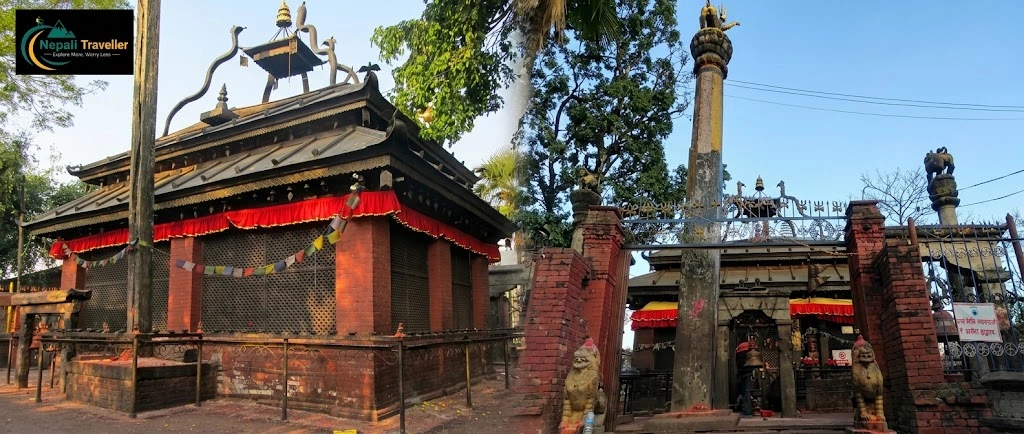
The Dolakha Bhimsen Temple is built in traditional Nepali pagoda style using stone, wood, and metal. The temple has elaborate carved wooden windows and a tiered pagoda-style roof that is typical of many ancient Nepali temple complexes. Within, visitors are able to see a black stone statue of Lord Bhimsen carving in the likeness of Bhimsen and wearing a sword, which represents valor and bravery.
The temple is remarkable for its roofless centerpiece, which, again, has a triangular stone idol of Bhimsen. It is thought the idol begins as Bhimeshwar in the morning, changes to Mahadeva during the day, or Narayana in the evening in some versions of memory.
Spiritual Relevance and Cultural Significance
The Dolakha Bhimsen Temple is significant religiously for the people of Nepal, especially for those who want to honor Bhimsen as the god of strength and protection. Many come to the temple to pray for their health, prosperity, and help during difficulties. The temple is also known for the festivals, particularly Bhimsen Jayanti, when devotees from around Nepal visit to pray and take part in the Grand celebration.
The Newar community in particular respects Bhimsen as the god of trade, commerce, and fortune. He is thought to provide security and success, and the temples and festivals provide remnants of Newars veneration of the deity.
The Sweating Idol: A Divine Omen
One of the most interesting features of the Dolakha Bhimsen Temple is the “sweating” of the Bhimsen idol. It is said that it sometimes “sweats” in drops, the form of water-like fluid, and represents a bad omen for the country. Bhimsen is said to, through sweating, forewarn and attempt to save his people in distress. Traditionally, when the idol “sweated,” after the priest had soaked the sweat in cotton he wouldn’t send the cotton swab to the royal palace. The king in return would send two goats and a sum of money to help dispel bad luck. This practice has stopped after significant political change in Nepal.
Some reports of the idol sweating are:
- Before the transition of Rana rule in 2007 BS.
- Before the Earthquake of 1934 that killed 8500.
- A few days before the royal Massacre in 2001 that killed king Birendra and his family.
- On February 20, 2020, resulting in atonement rituals being performed.
Such events have added to the temple’s mystique and validity, as a place of divine significance.
Mysticism and Local Beliefs
An element of mysticism is the belief that the Bhimsen idol can “sweat” and therefore predict a major national event. The type of liquid seen on the deity, is interpreted by priests and locals alike as a divine message. Although science could reasonably attribute the liquid to condensation state or weather element, the people of Dolakha perceive it as a spiritual signal.
During these situations, local shamans or Jhankris may be called upon to conduct rituals in order to read the symbols and warn how to prevent this disaster. These spiritual figures in Nepal’s rural areas tend to remain rooted in old animistic beliefs, but also overlap with a lot of Hindu symbols and rituals.
Festivals and Pilgrimage
The Dolakha Bhimsen Temple attracts about 5,000 worshipers a week. Devotees visit the temple and on occasion to receive blessings for health, wealth and security. The temple gets crowded with worshipers most notably during the festivals such as Bhimsen Jayanti and Chaitra Dashain, which include unique prayers and rituals.
Bhimsen Jayanti or the birthday of Bhimsen is robustly celebrated, leading devotees from the different corners of Nepal to the temple. Participants will offer gifts, prayers and gatherings solidifying the temple as a representation of communal and devotional celebration of life.
How to Reach Dolakha Bhimsen Temple
It is not complicated to reach the Dolakha Bhimsen Temple from Kathmandu, to reach the temple, you can take a bus or private vehicle. The road journey is about 5-6 hours, and travel time will depend on your traffic, and road conditions. Once you reach Dolakha area, there are short congregational walks to reach the temple.
Journey through the Scenic Landscapes
The trip to Dolakha Bhimsensthan should be equal to an equal destination value. The way provides majestic views of terraced hill country, beautiful villages, and green hills. Traveler travels through towns like Mude and Khadichaur and reaches the town of Charikot. Charikot serves as an administrative town of Dolakha District and the possible official town to Bhimsensthan. Charikot also is the final stop of the route for pilgrims travelling from Kathmandu.
Public buses from Kathmandu usually are cheap and leave from the old Bus Park in Ratna Park. For added comfort there are also private vehicles and tourist buses can also be hired which offer benefit and convenience.
Nearby Attractions and Extended Stay Options
Dolakha Bhimsen Temple is a spiritual hub in the area, but the surrounding areas have plenty of other attractions for people visiting.
1. Charikot Town
Charikot town is a lovely combination of old-style buildings and new-style town. It is a good place to rest, try some new local food, and visit local markets filled with handcrafted sculpture works primarily in wood and metal by Newar artisans.
2. Jiri: Gateway to Everest
Often referred to as the “Switzerland of Nepal” for its alpine landscape, Jiri is about 50 kilometers from Dolakha. It used to be the starting point for many Everest expeditions before the Lukla airport existed. For trekkers looking for off-the-beaten-path options, Jiri offers a number of trails and rural homestays.
3. Kalinchowk Bhagwati Temple
Kalinchowk Bhagwati Temple is another prominent pilgrimage site about 18 km from Charikot. At an elevation of 3,842 meters, it commands views of Himalayan ranges including Gauri Shankar, Langtang, and Mount Everest on clearer days. It is especially popular in the winter due to the snow sports and cable car, which takes visitors to the temple.
Local Food & Culture
The Dolakha District consists of a combination of ethnic communities such as Newar, Tamang, Sherpa, and Chhetri. This blend of culture is also present in the food, language, and traditions.
Some popular local dishes include:
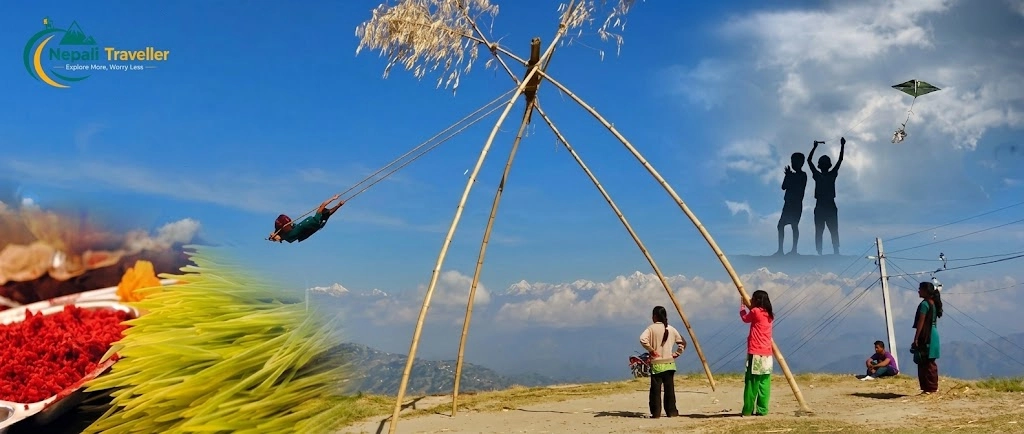
- Kwati: Generally made of 9 types of sprouted beans, kwati is a soup made for special occasions, or festivals.
- Yomari: The traditional Newar food of dough made of rice flour filled with a mixture of jaggery and sesame paste.
- Gundruk: Fermented leafy greens that are either served with rice or used as a side dish.
- Chhurpi: A tough cheese from yak milk, commonly consumed in hilly regions.
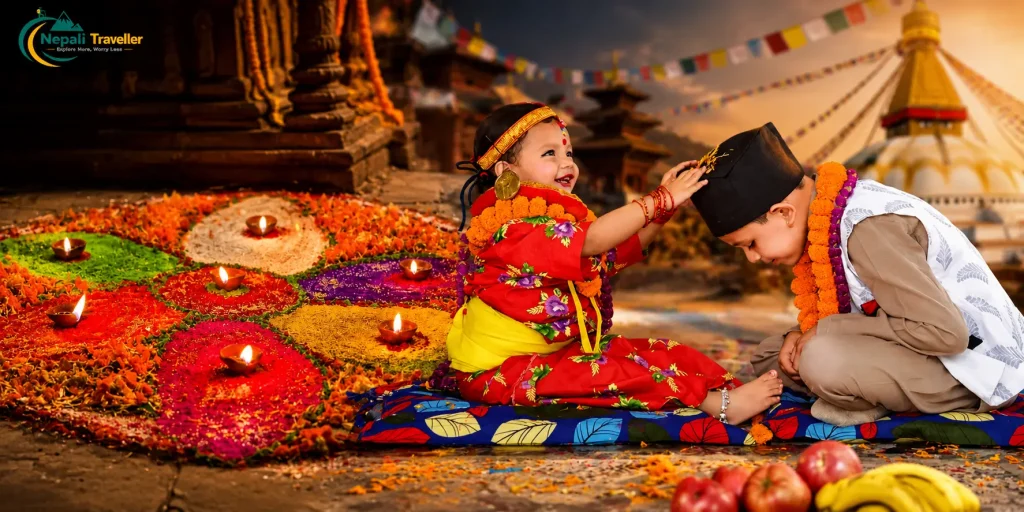
Festivities are all about the beautiful and colorful display of cultural heritage in Dolakha. The locals wear traditional attire, perform dances, and often carry out the rituals that have been in place for many centuries. This strengthens the cultural heritage side of the pilgrimage experience.
Spiritual Practices and Rituals
Visiting Dolakha Bhimsensthan is more than sightseeing for many devotees. Commonly practiced rituals are:
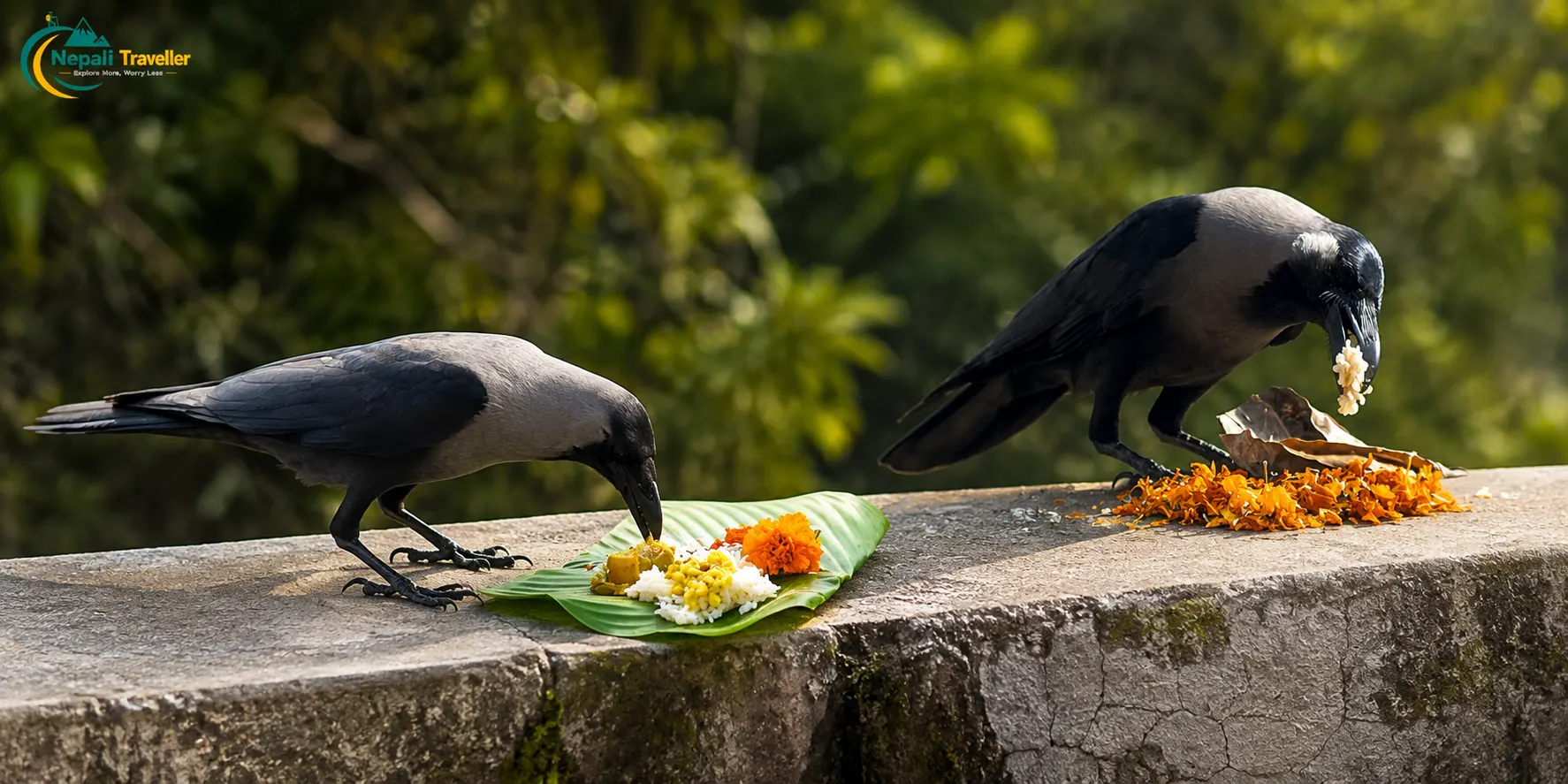
- Offerings of rice, flowers, vermillion powder (abir) and coins to the idol.
- Animal sacrifices (as seen during festivals like Dashain) though this practice has lessened through the changes to cultural sensitivities.
- A lighting of oil lamps and butter lamps by pilgrims wanting blessings for their families, or even simply because they were praying for a specific cause.
- An ablution and circumambulation of the temple structure. This is a typical practice of Hindus that signifies reverence.
Photography and Responsible Tourism
Dolakha Bhimsen Temple is a photographer’s paradise: the architecture is full of drama, the ceremonies are colourful, and the surroundings are dramatic with mountains in the background. However, there are some simple practices that travellers should implement to be respectful of the local people and traditions:
- Never take photographs inside the sanctum unless specifically instructed you can.
- Dress conservatively and remove shoes when entering the temple area.
- Do not make loud noises or be obnoxious when the temple is open for prayer.
- Support local businesses by purchasing souvenirs or food from nearby vendors.
Accommodation and Facilities
While Dolakha does not offer luxury accommodation specifically for tourists, it has satisfactory facilities for pilgrims and visitors. There are a couple of options for the visitor:
- Local guesthouses or homestays in Charikot and Dolakha Bazar. These visitor oriented businesses allow visitors a glimpse into the local lifestyle – these options are relatively cheap compared to standard hospitality.
- Hotels and lodges in Charikot with more amenities: attached bathrooms and WiFi, and predetermined meals.
- Camping and trekking options to other areas to explore if a visitor wishes to go past the temple area and trek in the area in or towards Kalinchowk or Jiri.
Preservation Challenges and Development
Despite the deep religious and historic significance of the Dolakha Bhimsen Temple, there are still many preservation challenges:
- Earthquake damage: The 2015 Nepal Earthquake caused destruction to many heritage sites, including this temple. Though restoration work is incomplete, it is important to clarify that preserving ancient carvings and ensuring the preservation of traditions related to building practices are ongoing challenges.
- Environmental degradation: Flooding footfalls have also created certain issues – littering and pollution abound. While communities and local authorities are engaged in eco-friendly and cleaner practices and actions, the environmental implications rise each day.
- Commercialization vs. authenticity of religious space: There is a complicated balancing act between responding to economic benefits of tourism but also protecting the morality of leading religious spaces as sacred and spiritual spaces, where the over commercialization could harm the atmosphere of the engagement.
Conclusion
The Dolakha Bhimsensthan is more than a temple. It is a museum in living development relating to spirituality, culture and resilience to human stress. It is where ancient stories shape us today, where gods speak through stone, and devotion lays pulsating in the air.
Whether you are a spiritual seeker, culturally engaged, or just curious, the Dolakha Bhimsensthan visit is an epic experience. And when you leave, you leave with more than memories of architecture and rituals. You leave having participated in Nepali heritage‘s rich and diverse culture.