
Annapurna Base Camp Trek: What to Expect on Nepal’s Classic Sanctuary Walk
 admin
6 min read
16 views
There is a moment on the Annapurna Base Camp trek when the valley closes in behind you and the mountains stop being scenery. You walk up the Modi Khola valley for six days, through rice terraces, bamboo forest and Gurung villages and then the trail opens into the Sanctuary, a natural amphitheatre walled by peaks over 7,000 metres. Annapurna I, Machapuchare and Hiunchuli stand close enough to feel. It is the kind of place that makes first-time trekkers understand why people keep coming back to Nepal.
The ABC trek is often called the most rewarding short trek in the Himalaya, and the description holds up. It packs a full mountain experience big peaks, real altitude, living mountain culture into a walk that fits a two-week holiday, with no technical climbing and no flight to a mountain airstrip.
The route in brief
The classic trek runs 12 days from Kathmandu to Kathmandu. After a drive or short flight to Pokhara, the trail starts at Nayapul (1,070 m) and climbs steadily to Annapurna Base Camp at 4,130 m. The walking days are 5–7 hours each, mostly on stone steps and dirt trails.
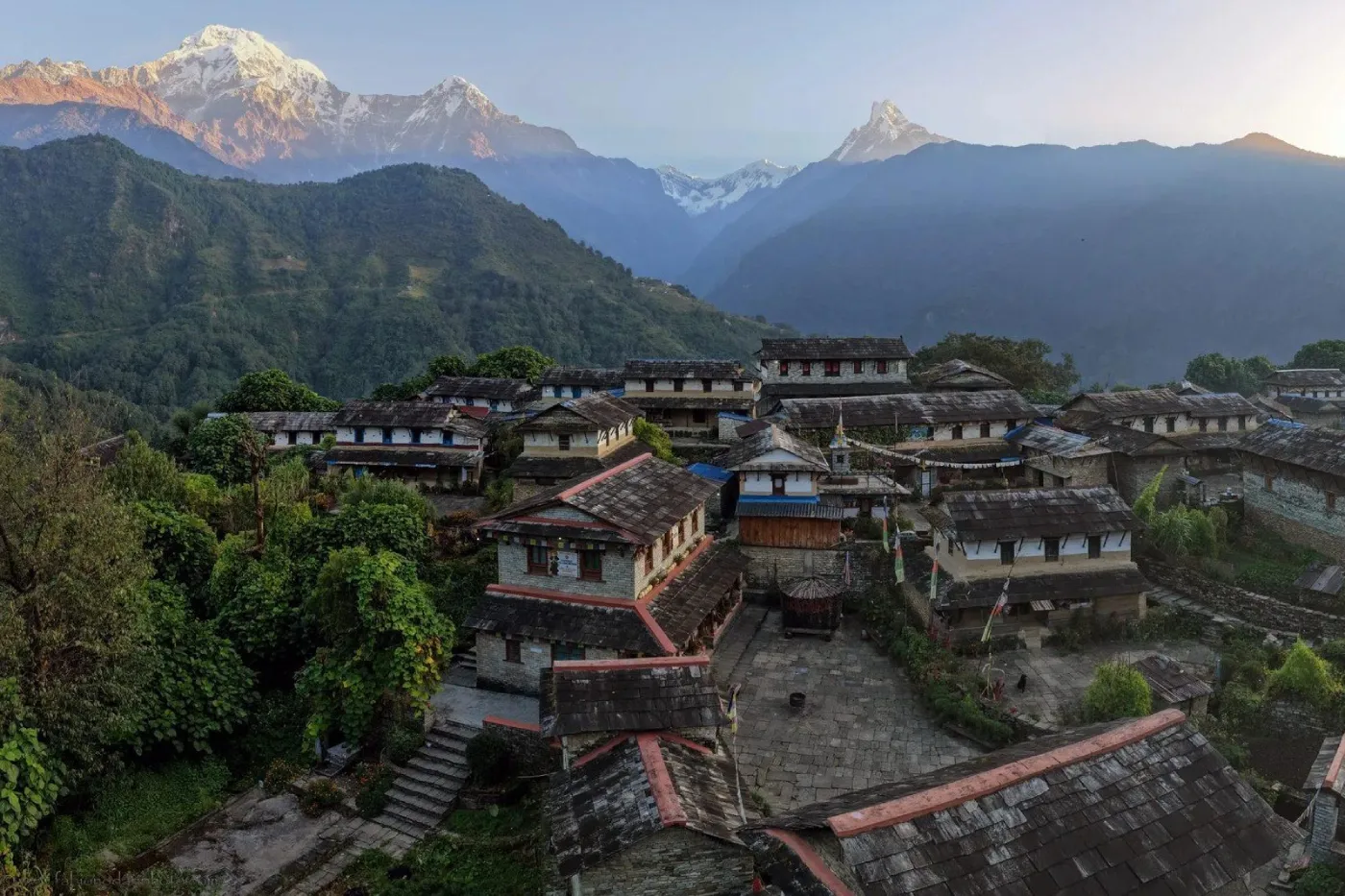
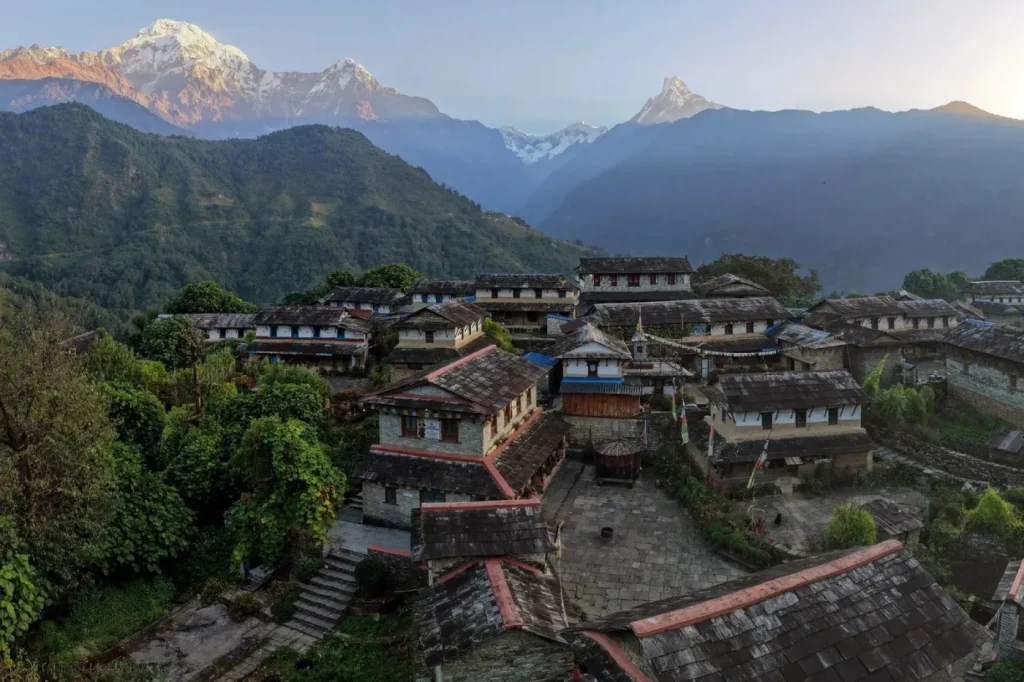
The first days are the gentlest and, for many trekkers, the most memorable. Ghandruk (1,940 m) is a large Gurung village of flagstoned streets and slate roofs, with views of Annapurna South, Hiunchuli and Machapuchare. Chhomrong (2,170 m), the last major settlement before the Sanctuary, is where most itineraries build in an acclimatisation day a rest day that matters, because this is the altitude where altitude sickness first tends to appear.
From Chhomrong the trail drops into the Modi Khola gorge and climbs again through bamboo and rhododendron forest to Bamboo (2,310 m) and Deurali (3,230 m). Above Deurali the trees thin out, the valley narrows, and the final push runs past Machapuchare Base Camp (3,700 m) and over glacial moraine into the Sanctuary itself. At base camp you sleep at 4,130 metres, watch the sunrise turn the peaks coral, and then descend usually to Bamboo the same day with the hot springs of Jhinu Danda waiting near the end of the walk down.
It is a teahouse trek, which means you sleep in lodges run by local families and eat in communal dining rooms. That setup keeps the trek affordable and puts money directly into the villages along the trail.
When to go
The two best windows are October–November and March–May. Autumn brings stable weather and the clearest mountain views after the monsoon has washed the dust from the air. Spring brings rhododendron in flower along the lower trail, with slightly warmer days. Winter is possible but the trail above Deurali can be blocked by snow, and the monsoon months (June–September) mean rain, leeches and cloudy peaks.
If your dates are flexible, aim for the second half of October or the first half of November: the trails are busy but the lodges cope, and the visibility is at its best.
How hard is it, honestly?
ABC is a moderate trek, and “moderate” deserves a plain explanation. You will walk 5–7 hours a day on uneven stone steps for six consecutive days, with a cumulative ascent of more than 2,000 metres from Ghandruk to base camp. The stone steps thousands of them, especially on the descents are hard on knees, and trekking poles are close to essential.
The altitude is real but manageable. At 4,130 metres most fit trekkers feel it a mild headache, a slower pace, a restless first night and a well-paced itinerary with an acclimatisation day keeps the risk low. Anyone with good cardiovascular fitness and some multi-day walking experience can do this trek. You do not need technical skills. You do need to be honest about your knees and your fitness before you book, and to tell your guide early if symptoms appear rather than pushing through them.
Do you need a guide?
The trail itself is well marked, and independent trekkers do walk it. But a good local guide changes the trek in ways that are hard to see until you are on the trail: reading the weather when snow shuts the route above Deurali, finding a bed in peak season when lodges fill up, handling the permits and lodge bookings, and knowing when a headache is just a headache and when it is time to descend.
That is also the practical point of going with a local company. If you want to visit Nepal and find a good guide, it is worth choosing a company that actually walks these trails every season. Wonder Hikes Nepal runs the Annapurna Base Camp trek as a 12-day package with licensed local guides, porters, and all permits and transport handled. Their guides are Sherpa and Tamang guides who know the Sanctuary’s weather patterns, and the small-group format (2–12 trekkers) keeps the experience personal rather than a moving crowd.
Permits and practicalities
Two permits are required: the Annapurna Conservation Area Permit (ACAP) and the TIMS card. Both are straightforward to arrange in Kathmandu or Pokhara, and a trekking company normally handles them as part of the package. Your permit fees fund trail maintenance and community development inside the conservation area, so they are money well spent.
Pack light but pack right: broken-in boots, layers for temperatures that swing from warm valleys to below freezing at base camp, a good down jacket, trekking poles, a water purification method, and sun protection, the UV at 4,000 metres is far stronger than most first-timers expect. Drink 3–4 litres of water a day, eat regularly even when altitude dulls your appetite, and skip alcohol on the way up.
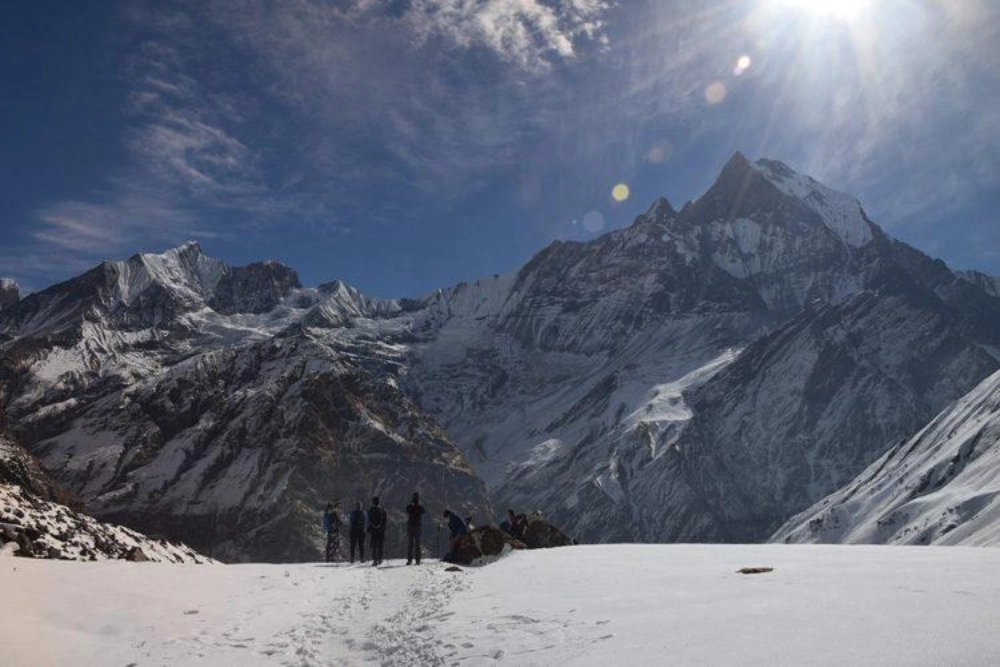
Trekkers under Machapuchare in the Sanctuary
A trek that earns its reputation
The Annapurna Base Camp trek works because it is complete. In twelve days you get terraced farmland, old Gurung villages, deep forest, a glacial basin and a dawn at 4,130 metres among the highest mountains on earth and then you walk back down to a hot spring and a proper meal in Pokhara. It asks for fitness and respect for the altitude, and it pays both back.
If Annapurna is on your list, start with the Annapurna Base Camp Trek and give yourself the full twelve days. The Sanctuary rewards trekkers who arrive slowly, and the mountain does the rest.